


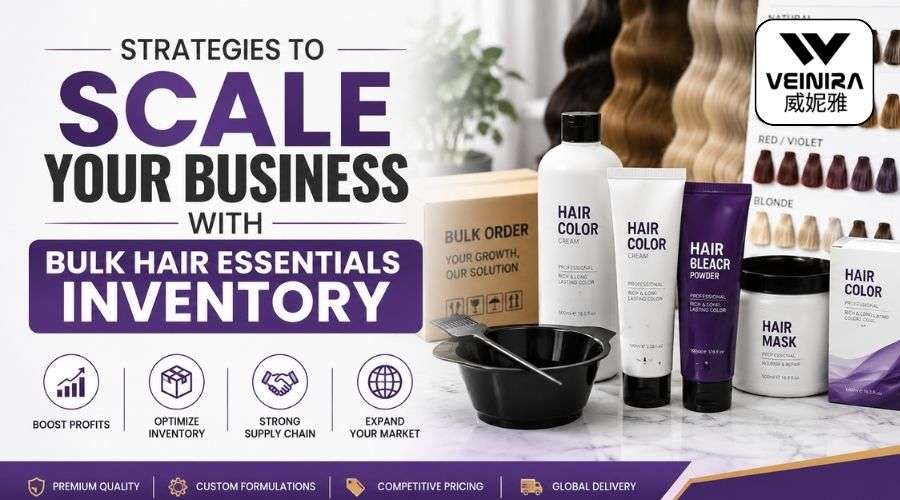
Strategies to Scale Your Business with Bulk Hair Essentials Inventory
Billions of dollars are spent on hair care products. Hair salon owners, beauty merchandise outlets, barbershops, and online stores compete to tap into a market that continues to grow. If you own a hair business of any sort, you know products fly off the shelves. People buy up the shampoo, conditioner, oil, or styling product, and then they're looking for more. The fastest-growing businesses in this sector share a common trait. Instead of buying in small quantities, they buy in bulk. Building a hair essentials inventory in bulk is a great way to expand a hair business, and this article explains how to do it.
Why Small Orders Are Holding Your Business Back
Small hair businesses typically order small amounts of products. It feels safer. You do not want to order too much and end up with products you can't sell. This is fine initially, but it causes problems if growth is desired. Small orders cost more per unit. They need to be reordered more often. Each small order wastes time, incurs shipping costs, and increases the risk of stockouts between orders. Losing out on a popular item is a sure way to alienate a customer. Ordering in bulk will fix all three problems. You get a discount on each unit, need to order less often, and don't run out of product. And with that, a business can plan for the future.
Request a Bulk Hair Dye and Hair Color Cream Quote Today
Understanding What Bulk Buying Really Means
Bulk buying is not like stocking up 10 years' worth of supplies. It just means buying more than you do now to obtain better prices and a more reliable supply. For your salon, bulk purchasing could be 10 bottles of shampoo at a time instead of 2. For an expanding beauty supply retailer, it might be a pallet from a distributor. Increase volume, decrease the cost per unit, and minimize the inconvenience of small, incremental orders. It's all about balance, between how much you can invest initially and how much you can sell over a reasonable time frame.
Know Your Product Turnover
The first step to any bulk order is knowing your numbers. How many of each product do you sell (or use) each week? Per month? What's selling well and what isn't?
Know Your Fast Movers
Fast movers are the items to buy in bulk. These are products customers come back to buy, things you are almost always out of stock, and the items you order the most. It makes sense to purchase these in bulk because they are guaranteed to sell. This is not the case with slow-moving products. Over-stocking products that don't sell creates cash flow problems and inventory issues. Consider your fast-selling items for your initial bulk buying and add to your stock when you know more about your storage and cash flow.
Is Bulk Buying Only for Large Businesses?
Not at all. Bulk buying is one of the quickest ways to help a small business "go big". Bumping order quantities up by a couple of percentage points can get a small business wholesale pricing. Distributors often have lower minimum order sizes than small companies might think. A salon owner purchasing beauty products in bulk with other small business owners in their local community can get the same price as a multi-store chain. Small beauty retailers can book orders directly with brands once they reach a certain size. It is possible for all businesses - it's just a matter of taking the first step.
Finding the Right Wholesale Supplier
Who you buy from is a key factor in the success of your bulk stock strategy. A wholesale supplier should be more than someone who sells you products cheaper. They offer consistent quality products, reasonable lead times, and stock levels that allow you to plan for the future.
What factors to look for when choosing a supplier
Find suppliers who specialize in hair rather than general beauty products. These will have a broader stock of hair products and will be more familiar with them. They will also stock professional-quality products that your customers can trust.
Do your research and ask fellow business owners. A reputable hair industry supplier is less likely to disappoint with unreliability or poor-quality products. Inquire about minimum order quantities, returns, product exchanges, and damaged items. A good supplier will be able to answer all of these questions.
Negotiating Better Deals as You Grow
The negotiations are opened by bulk buying. When you begin to place regular, larger orders, you start to provide a supplier with something of value: regular, predictable revenue. Customers who make frequent and large purchases will have most suppliers negotiate pricing, payment conditions, and delivery rules.
Fear not to negotiate or seek a better price. Demand progressive price tables with your price-to-unit ratio decreasing with order size. Inquire about special offers on some product lines. Inquire about early-payment discounts if your cash flow permits. What reduces your cost price increases your profit margin. Even a percentage of savings on buying in bulk would be a lot at the end of a year.
What is the impact of inventory management on business growth?
• Uncontrolled inventory management can quickly drown all the advantages of bulk purchases. Any form of purchasing in large quantities and forgetting about what you got, letting stuff spoil, or even storing it incorrectly will result in waste and undue losses. Bulk buying is a good idea, but inventory management makes it a viable growth strategy.
• A basic inventory tracking system is to be used initially. It does not have to be tricky - a well-ordered spreadsheet suffices at the start. Keep records on what you have, what you have ordered, and what you have sold. Look at these figures regularly to ensure you stay up to date on your stocks.
• As your business increases, you should consider investing in inventory management software that links with your sales system. This simplifies the process of reordering and minimizes the chances of the company being caught with short stocks of critical items.
Smart Storage Solutions for Hair Essentials
Large-scale inventory requires space. Storage is one of the most significant challenges to expanding a hair care business and should be considered before placing large orders.
Maintain Products in Good Condition
There are preferred storage conditions for hair care products. The majority have to be stored in the absence of direct sunlight and extreme temperatures. Conditioners, oils, and styling products can be affected by heat and may alter their consistency and effectiveness. A dry, cool area secures your stock and keeps your products sellable.
Arrange storage so that the older goods are in a way that is used or sold. It is known as the first-in, first-out technique and avoids the hassle of products sitting alone at the far end of a shelf until they are out of shape. Label shelves and maintain order in your storage space. The messy stockroom makes your staff slower and increases the likelihood of mistakes.
Using Bulk Inventory to Expand Your Product Range
Among the less-obvious advantages of purchasing in bulk is that it allows you to diversify your product offerings. With a healthy stock of your core products, and with your margins that aren’t clenched so tight, you have the leeway to launch new products without the pressure to promote the sales of those new items.
With bulk purchasing power, you can experiment with new product lines in very small quantities and still gain the advantage of larger discounts. When a new product is doing well, you add it to your normal bulk purchases. Otherwise, you will not have oversold stock or cash. This type of planned growth is how most small hair care companies start, with a focus on selling a limited line of products and building a well-served business that attracts a much broader range of customers.
Building Customer Loyalty Through Consistent Stock
There is nothing more frustrating for a common customer than being told they are out of stock of their favorite product. It occurs to companies that depend on small, reactive buying - they run dry, they recycle, and in the meantime, their clientele moves to alternative vendors.
Bulk inventory gets rid of that. By keeping your shelves stocked with the products your customers need, you become the company they trust. Trust can convert occasional purchasers into regulars, and regulars make the base of any business aspiring to become large. To encourage repeat purchases, consider introducing loyalty programs or subscriptions for customers who regularly purchase hair essentials. With the stock in bulk at the back, you can safely dedicate yourself to those programs, knowing you will never run out.
Can Bulk Inventory Improve Your Online Sales Too?
Absolutely, If you sell hair necessities online, a bulk inventory will give you a considerable competitive edge. Customers' online demand quick delivery. When you have orders to fulfill and the time it takes to receive stock, you will lose business to other manufacturers that ship sooner.
With bulk inventory available, you can fill orders the same day or the next. Quick delivery results in favorable feedback, increased repeat business, and enhanced referrals. It is also capable of conducting research, promotional campaigns, and flash sales without worrying about the stock needed to cover the demand that such promotions will create.
Conclusion
Increasing a hair-care business requires more than excellent products and promotion. It entails making smart, long-term buying choices. An inventory of bulk hair necessities reduces expenses, balances supply, boosts customer confidence, and supports business growth. A successful hair care business that scales is the one that doesn't just respond to demand; rather, it plans ahead of demand.
Frequently Asked Questions (FAQs)
1. Why should businesses buy hair essentials in bulk?
Purchasing hair essentials in bulk reduces per-unit costs, maintains steady inventory, and increases profit margins. Wholesale buying also minimizes stock shortages and helps meet customer demand without frequent reorders.
2. Which hair products are best to include in a bulk inventory?
A balanced bulk inventory should include high-demand items such as hair cream, hair color, hair dye, hair extensions, shampoos, conditioners, and styling products. Choosing products based on market demand and customer preferences maximizes sales and inventory turnover.
3. How do I choose a reliable bulk hair essentials manufacturer?
Select a manufacturer that delivers consistent quality, flexible order sizes, private label options, competitive pricing, and reliable shipping. The supplier should also offer product customization and support for international buyers.
4. How can bulk hair essentials inventory help scale my beauty business?
A well-managed bulk inventory enables businesses to fulfill larger orders, lower procurement costs, enhance customer satisfaction, and enter new markets. It also supports launching new product lines and building long-term relationships with distributors and retailers.
More Blogs Like This
Hair Essentials Checklist Every Wholesaler Needs to Maximize Sales
Herbal vs Chemical Black Hair Shampoo: Market Demand Insights for Distributors
Featured Articles
Billions of dollars are spent on
READ FULL