


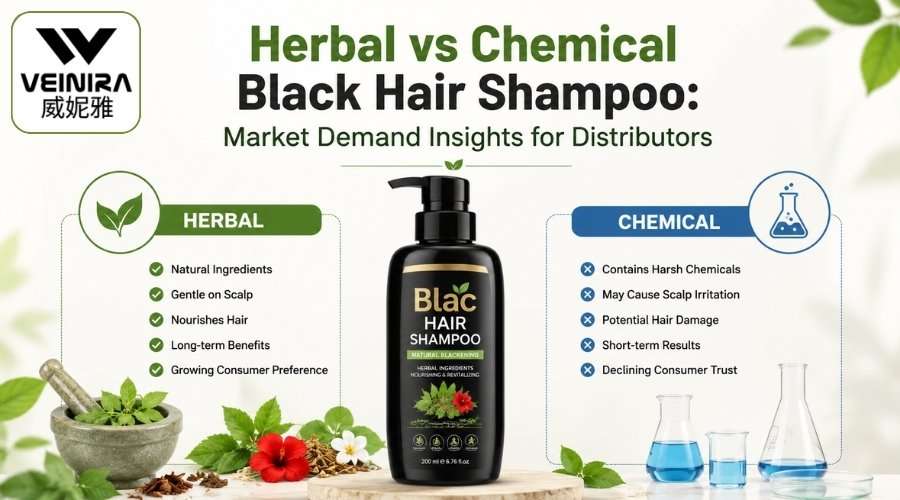
Herbal vs Chemical Black Hair Shampoo: Market Demand Insights for Distributors
The black hair shampoo business is expanding rapidly. More individuals want dark, shiny hair without visiting a salon every week. This has led to a high demand for black hair shampoos across various markets. This is an actual opportunity for distributors, but you need to know what the buyers actually desire.
The biggest controversy in this line is currently between herbal and chemical black-hair shampoos. Each of them has its loyal customers. They both sell well in various markets. However, they target very different customers for very different reasons. This division will help in understanding how to create a product line that sells consistently. This guide differentiates the two types, contrasts their market demand, and provides distributors with actionable information to stock smarter.
Black Hair Shampoo knowledge
The black-hair shampoo is made to keep hair dark. It is not used the same way as regular hair dye. Rather than applying color once, black hair shampoo is used regularly during washing. Over time, it deepens gray hair, adds depth to fading color, and gives hair a natural black or dark brown appearance.
Explore Bulk Black Hair Shampoo Solutions
Men and women who do not want to spend the time maintaining gray hair using permanent dye enjoy its popularity. People who need to enrich the natural richness of their dark hair also use it. The product is available in two broad categories: herbal formulas based on natural plant substances and chemical formulas that use synthetic dyes and chemicals to achieve quicker effects.
The Rise of Herbal Black Hair Shampoo
Herbal Black hair shampoo has been growing steadily in recent years. Customers are getting more aware of the contents of their goods. They focus on reading the ingredient labels. They seek out natural alternatives. This change in purchasing habits has put herbal products in the limelight.
What Goes into Herbal Formulas
The herbal black hair shampoos are normally composed of the following: bhringraj, amla, henna, indigo, black sesame, and shikakai. They are centuries-old Ayurvedic and natural hair care herbs. They condition the hair, hydrate the scalp, and do not use harsh chemicals.
These ingredients also have high marketing potential. Some of the words that draw buyers' attention, especially those who worry about contact with chemicals, are natural, Ayurvedic, and plant-based. This is especially true in the South Asian and Middle Eastern markets and even in Western countries, where the tendency is towards natural beauty products.
Who Buys Herbal Black Hair Shampoo
An average consumer of herbal black hair shampoo is health-conscious. They can already use other natural or organic products. They will generally be ready to pay a higher price for a product they trust. They prefer gradual, gentle outcomes to quick chemical processes. This may be seen as a buyer segment comprising older consumers who keep their hair gray, parents who want to use safer hair-care products, and children who buy online according to natural-beauty trends.
Chemical Black Hair Shampoo: Remains a Powerful Seller
The market of chemical black hair shampoos is decades old. Their one reason to be popular is that they are fast. Darkening results are visible to the user in a couple of washes. Chemical formulas remain the leading choice for buyers seeking fast results.
How Chemical Formulas Work
Chemical black hair shampoos contain chemicals such as lead acetate, silver nitrate, or artificial dye compounds that attach to the hair shaft and are fixed in place to deposit color. Conditioning agents are also added to certain formulas to minimize damage and make hair smooth.
These products are readily available, tend to be cheaper than herbal products, and deliver reliable results. To distributors, they have a steady demand and reduced-price tags that appeal to low-end buyers.
Who Buys Chemical Black Hair Shampoo?
Customers of chemical black-hair shampoos are more results-oriented. They desire rapid, noticeable darkening. They are not so much concerned with ingredient lists but rather with performance. These consumers are older men and women seeking quick gray coverage, those in price-sensitive markets, and users of chemical hair products who are comfortable with them.
Market Demand Comparison: Herbal vs Chemical
Knowledge of the demand location is useful for enabling distributors to stock wisely.
Herbal Demand Is Climbing
Natural and organic personal care products have become products of much interest worldwide. The clean beauty movement is not a fad, as it has been steadily increasing in popularity over the past ten years and is unlikely to decrease. Herbal black hair shampoo is reaping the direct benefits of this change.
There is a rise in search interest in terms such as natural black-hair shampoo, Ayurvedic hair-color shampoo, and chemical-free gray coverage. Salon consumers and health-oriented retail stores are actively stocking herbals. Distributors stocking good herbal black hair shampoos are selling to a buyer segment ready to pay high prices. This enhances the margins over the less expensive chemical products.
Chemical Demand Remains Stable
Chemical black hair dyes are here to stay. Chemical formulas remain popular in most markets, particularly in price-sensitive regions and among older populations. Their affordability, faster output, and extended shelf life guarantee consistent, predictable demand.
To distributors, the chemical black hair shampoos are volume movers. Their unit margins may be lower, but they are a reliable element of any product catalog because they have consistent reorder rates.
What Are the Key Differences Distributors Should Know?
The product differences will make you understand how to communicate with your buyers, who may be salon owners, managers of the retail shops, or online resellers.
Results Timeline
The darkening of hair in herbal products occurs over several washes. This is an advantage for buyers who desire a natural appearance, but a disadvantage for those who want quick results. The chemical products are quicker in their results, which can be achieved in less than two to five washes.
Ingredient Safety Concerns
Chemical black hair shampoos also contain ingredients such as lead acetate, which has been the subject of growing regulatory scrutiny in a number of countries. The FDA in the US has limited the use of lead acetate in cosmetics. Similar restrictions apply to European markets. In regulated markets, distributors should ensure ingredient compliance before stocking chemical formulas.
There are also fewer regulatory obstacles to herbal formulas. They have a more universally accepted natural ingredient base. This becomes a valuable practical benefit to the distributors across various nations.
Storage and Shelf Life
Synthetic preservatives in chemical black hair shampoos help them last longer. Herbs can have a short shelf life, and in some cases, their storage conditions may be delicate. It is a logistical factor to consider by distributors dealing with high inventories.
Pricing and Margins
Herbal commodities have premium prices. Customers pay more for natural ingredients and clean formulas. This opens up improved margin opportunities to distributors. Chemical products are sold at low prices and in large quantities. Equilibrium between the two provides a distributor with the best of both worlds.
Is the Herbal Segment Worth the Higher Investment?
To the majority of distributors, yes, the herbal segment is worthy of consideration, particularly in the markets where the natural beauty products are rising. Customers in this segment are more loyal and price-sensitive, and they will stay with a product once they discover one they trust. Providing quality herb black hair shampoos will access a higher value retail market, health shops, or through the internet, where people have higher margins.
Regional Demand Patterns
The market need for black hair shampoos varies by location. Distributors have needed to be aware of such trends when stocking their shelves as they enter new markets.
South Asia
India, Pakistan, Bangladesh, and Sri Lanka are devoted to herbal hair treatment. The cultural trust towards Ayurvedic products is high. Black-hair shampoos that include bhringraj, amla, and henna are very popular. There is also a market in chemical options, especially in urban areas, driven by convenience.
Middle East and Africa
The Middle East and Africa are increasing their demand for black hair shampoos. There are buyers of both herbal and chemical products. Attractively packaged premium herbal products do well in the Gulf markets. Affordability tends to inform decisions in African markets, so low-cost chemical alternatives are in demand.
Europe and North America
Natural and certified organic products are targeted towards these markets. Herbal formulas are a wiser choice for inventory due to regulatory restrictions on other chemical ingredients. In this location, clean beauty is not a niche; it is mainstream.
Asia
Demand for black hair products rises in China, Indonesia, and Vietnam. The usage of the traditional ingredients in the herbal formulas is appealing to customers who consider heritage wellness. There is still a market share where chemical formulas are used, yet the growth in herbal products is significant.
How Should Distributors Build Their Product Mix?
Developing the appropriate product mix is a balancing process. The idea is to cater to various buyer segments without making your catalog too complex.
Lead with Herbal, Support with Chemical
Position Herbal Black Hair Shampoos as your high-end product. Make them appeal to health-conscious retailers, specialty shops, and online shops. support this with a range of chemical products at affordable prices, delivered in large volumes to price-conscious markets.
Provide Various Prices
Under every category, there are stock products at various price levels. Premium, mid-range, and entry-level options provide flexibility to your buyers. It also implies that you can cater to both small stand-alone shops and large retail chains.
Give Attention to Packaging
In this category, packaging is important. The natural ingredients are usually visually displayed in clear, minimal packaging, which helps sell herbal products. With chemical products, it is usual to sell based on the claims on the packaging, covering a "gray-in-5-washes" type of message. Ensure that the products that you keep have packaging that talks to the target buyer.
What Are the Biggest Challenges for Distributors in This Market?
The key hurdles are compliance with ingredients in various markets, shelf life of herbal products, and informing buyers about the difference between gradual herbal and quick chemical outcomes. Those distributors who will take the time to understand these issues and explain them well to their retail customers will have fewer backlogs, fewer complaints, and better long-term relationships with their customers.
Trends observed in the black hair shampoo market
The following are some trends that will shape this market's direction in the coming years.
Hybrid Formulas
Some manufacturers are currently producing hybrid formulas, or products with natural herbs with slight synthetic ingredients. They are engineered to deliver the best performance, have a cleaner ingredient profile, and are higher-performing. It is one of the new segments to watch.
No Sulfate and No Paraben
With premium markets, buyers are increasingly seeking sulfate-free and paraben-free formulas. These assertions bring value even in the chemical segment. Such products will sell faster in health-conscious markets due to the claims made.
Packaging
Green packaging is coming up as a buying factor, especially in Europe and North America. Retailers who receive items with recycling or biodegradable wrapping will be tapping into green-oriented retailing channels more easily.
Are there any real regulatory compliance risks to Chemical Black Hair Shampoo Distributors?
Yes, it is a real threat, which must not be disregarded. Some of the products employed in chemical black hair shampoos, especially lead acetate, are limited or prohibited in the largest markets such as the United States and the European Union. Distributors who have obtained chemical products without verifying that their ingredients comply may face import rejections, fines, or recalls. It is better to remember that the products you are stocking should be in line with the policies of the markets to which you are selling.
Conclusion
Herbal and chemical black hair shampoos have a strong market presence. Neither is leaving. Nonetheless, there is a clear trend toward shifting growth toward herbal and natural formulas, driven by consumer demand worldwide for cleaner, safer products. The distributors that make it in this market are those that look beyond the product itself and recognize the kind of people who will purchase it. When you have the right product on the market, the sales will follow.
Frequently Asked Questions (FAQ's)
Where to buy black hair shampoo online in bulk?
You can buy black hair shampoo in bulk from B2B platforms like Alibaba and Made-in-China, or directly from herbal and cosmetic manufacturers that offer wholesale pricing.
How to choose the right supplier for black hair shampoo?
Choose a supplier who provides ingredient transparency, compliance certifications, consistent product quality, and flexible minimum order quantities for both herbal and chemical ranges.
How to source black hair shampoo for your business?
Source black hair shampoo by identifying your target market first, then requesting samples from verified manufacturers to test quality before placing bulk orders.
What is the main benefit of stocking herbal black hair shampoo over chemical options?
Herbal black hair shampoos carry higher price points, attract loyal health-conscious buyers, and face fewer regulatory restrictions across international markets.
What are the key features to look for in a quality black hair shampoo?
Look for natural or compliant ingredients, a clear darkening mechanism, good lather, scalp-safe formulation, and packaging that clearly communicates the product's benefits to end buyers.
What are the most common uses of black hair shampoo among end consumers?
Black-hair shampoo is used to cover gray hair gradually, maintain dark hair color, and add depth and shine to faded or dull hair with regular washes.
How does pricing differ between herbal and chemical black hair shampoo at the wholesale level?
Herbal black hair shampoos are priced higher per unit because of their natural ingredients, while chemical options are more affordable and better suited for high-volume, budget-focused markets.
Why should distributors stock both herbal and chemical black hair shampoos?
Stocking both types allows distributors to serve premium health-focused buyers and budget-conscious volume buyers simultaneously, maximizing overall sales reach.
Important Resources
Featured Articles
Billions of dollars are spent on
READ FULL